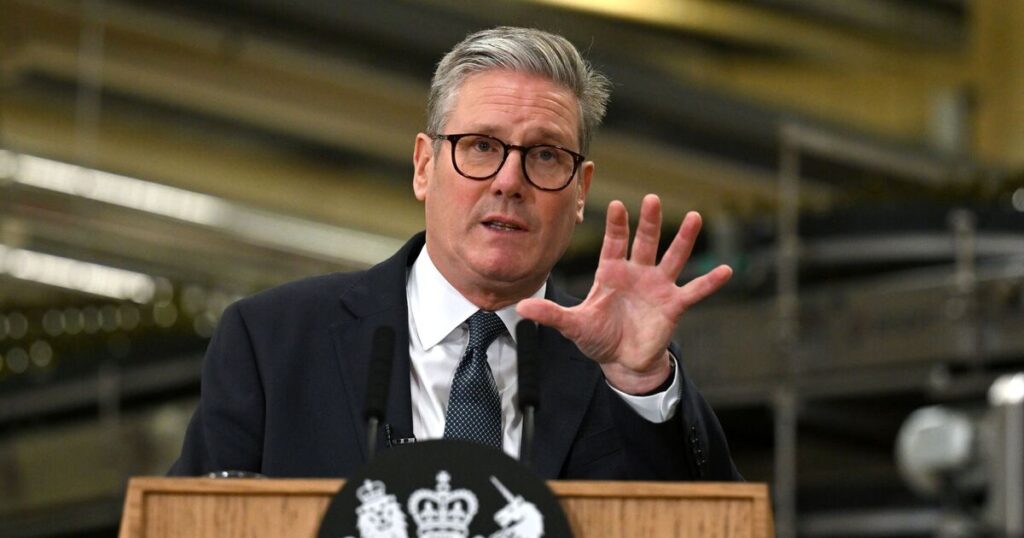

From a working-class home in Surrey to the steps of 10 Downing Street, the story of Sir Keir Starmer is one of the most compelling political journeys in modern British history. As UK Prime Minister and Leader of the Labour Party, Starmer has reshaped the landscape of British politics — bringing discipline, legal precision, and a centrist pragmatism to a party that spent over a decade in opposition.
Before entering politics, Starmer built an internationally respected career as a human rights barrister, championing civil liberties and fighting for the most vulnerable in society. His appointment as Director of Public Prosecutions (DPP) from 2008 to 2013 further elevated his public profile, placing him at the heart of England and Wales’s criminal justice system.
In April 2020, he took the reins of the Labour Party following a crushing general election defeat. Four years later, on 5 July 2024, Starmer led Labour to a landslide victory — ending 14 consecutive years of Conservative rule and becoming the first Labour Prime Minister since Gordon Brown in 2010.
This comprehensive Keir Starmer biography explores every dimension of his life: his upbringing, education, legal career, political rise, family, and the complex challenges of governing modern Britain.
Early Life and Background
Personal Profile
| Full Name | Sir Keir Rodney Starmer KCB KC MP |
| Date of Birth | 2 September 1962 |
| Place of Birth | Southwark, London, England |
| Nationality | British |
| Political Party | Labour Party |
Sir Keir Rodney Starmer was born on 2 September 1962 in Southwark, London, and grew up in the town of Oxted in Surrey. He is one of four children born to Rodney Starmer — a toolmaker who worked long hours in a factory — and Josephine Starmer, a nurse in Britain’s National Health Service. His parents were staunch Labour supporters, and it is widely reported that he was named after Keir Hardie, the founding parliamentary leader of the Labour Party.
Starmer’s upbringing was decidedly working-class, a fact he has returned to repeatedly throughout his political career. His father was a hardworking but emotionally reserved man; Starmer has publicly acknowledged that their relationship was distant, noting that his father rarely expressed affection or pride. His mother, Josephine, suffered for many years from Still’s disease — a severe autoinflammatory condition that eventually left her unable to walk, eat, or speak properly. Her reliance on the NHS left a profound mark on Starmer, and he has cited her struggles as a fundamental driver of his commitment to public healthcare.
Growing Up: Values Shaped by Circumstance
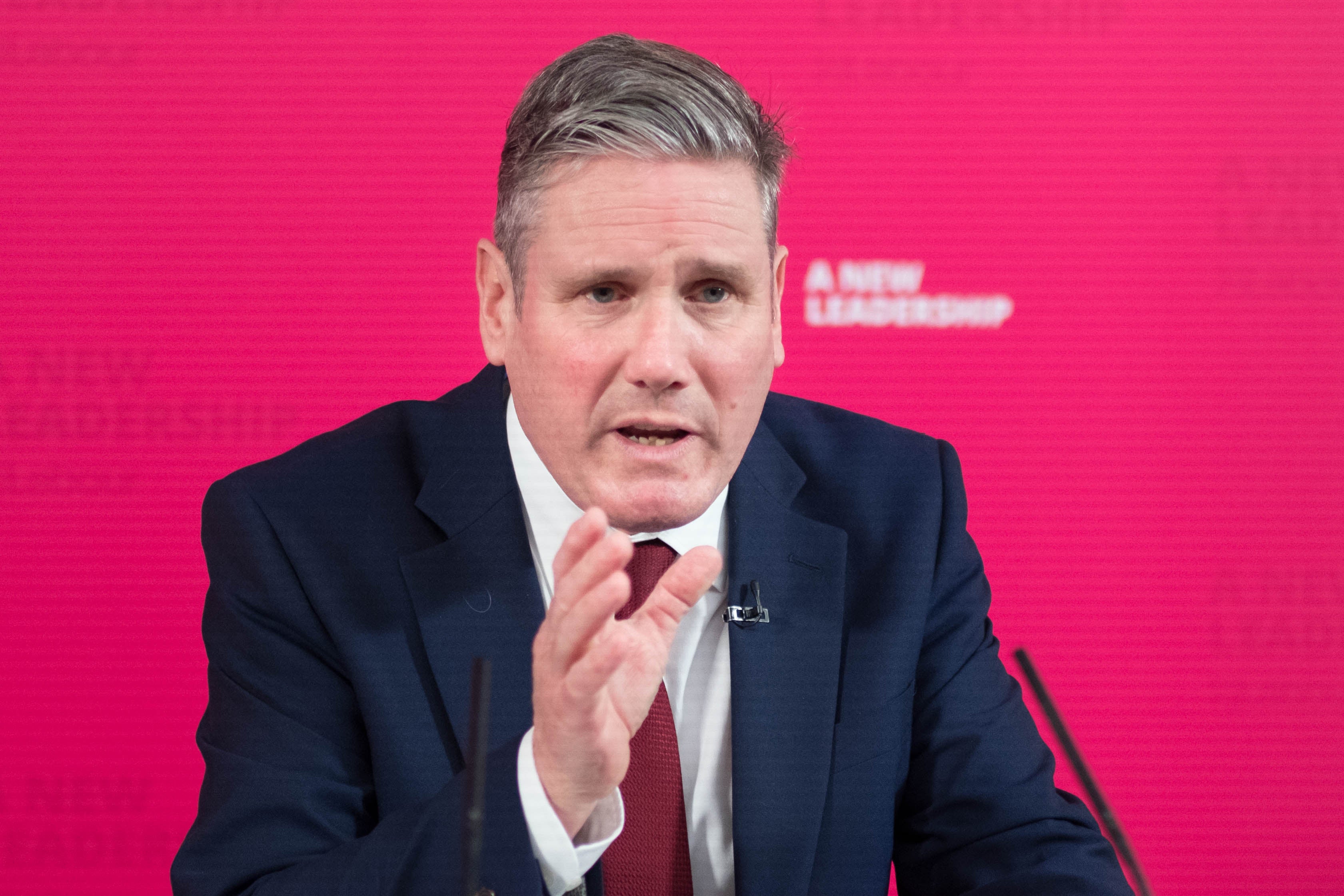
Despite their modest means, Starmer’s parents placed great value on education. He attended Reigate Grammar School — a selective state school that transitioned to private status while he was a student there. This detail has attracted minor controversy throughout his political life, as critics have questioned whether attending a fee-paying school sits comfortably with Labour’s traditional stance on education. Starmer has addressed this directly, noting he did not choose the school and that his background remained firmly working-class.
As a teenager, Starmer became politically engaged early, joining the Labour Party Young Socialists at the age of 16. He was an avid reader and intellectually curious from a young age, drawn toward questions of justice, rights, and social inequality.
Education and Legal Career
Academic Foundation
Keir Starmer was the first member of his family to attend university — a milestone that has shaped his identity as a self-made professional from a working-class background. He studied law at the University of Leeds, graduating with a Bachelor of Law degree in 1985. He subsequently completed postgraduate studies at St Edmund Hall, University of Oxford, earning a BCL (Bachelor of Civil Law) — Oxford’s flagship postgraduate law qualification.
His Oxford experience introduced him to the highest levels of British legal academia, while his Leeds foundation kept him grounded in a more accessible tradition. This dual educational background — elite without being entitled — would come to define his public image.
Life at the Bar: Human Rights Barrister
In 1987, Starmer was called to the Bar at the Middle Temple, beginning what would become a distinguished career as a barrister. He specialised in human rights and public law — a field that placed him squarely in opposition to state overreach and on the side of civil liberties. His casework was often high-profile and internationally significant.
Among his most notable early cases, Starmer served as legal adviser to the Northern Ireland Policing Board following the 1998 Good Friday Agreement, helping to shape policing reforms in the aftermath of the Troubles. He also represented environmental activists Helen Steel and David Morris — the “McLibel Two” — before the European Court of Human Rights, in one of the longest-running legal battles in British legal history.
In 2002, he was appointed Queen’s Counsel (QC), a mark of distinction in the British legal profession awarded to senior barristers of exceptional ability.
Director of Public Prosecutions (2008–2013)
Starmer’s most significant legal role came in 2008, when he was appointed Director of Public Prosecutions and Head of the Crown Prosecution Service (CPS) of England and Wales — one of the most powerful positions in the British justice system. He served until 2013, overseeing thousands of prosecutions across a period of considerable public and political turbulence.
Under his leadership, the CPS handled several major cases, including the prosecution of phone hacking at the News of the World, the prosecution of rioters following the 2011 London riots, and cases emerging from the sexual abuse scandal surrounding media personality Jimmy Savile. The Savile case proved controversial: the CPS had previously declined to prosecute Savile before his death. In 2022, Boris Johnson made a widely condemned and unsubstantiated claim that Starmer had personally blocked the prosecution — a charge roundly rejected by legal experts.
Starmer also reformed how the CPS handles sexual violence cases, implementing new guidance to better protect rape victims during trials.
Knighthood and Honours
In 2014, Starmer was appointed Knight Commander of the Order of the Bath (KCB) for his services to law and criminal justice — making him “Sir Keir.” He is one of the very few Prime Ministers to have entered Downing Street already holding a knighthood.
Political Career
Member of Parliament: Holborn and St Pancras (2015–Present)
See: https://www.gov.uk/government/people/keir-starmer
Keir Starmer entered elected politics in December 2014, when he was selected as the Labour candidate for Holborn and St Pancras. He was elected to the House of Commons on 7 May 2015. When Jeremy Corbyn won the Labour leadership later that year, he appointed Starmer as Shadow Home Office Minister. Starmer subsequently served as Shadow Secretary of State for Exiting the European Union from 2016 to 2020, becoming one of the most prominent advocates for a second referendum on Brexit.
Labour Leadership: The Road Back to Power
Following Labour’s catastrophic 2019 general election defeat — its worst since 1935 — Corbyn resigned. On 4 April 2020, Keir Starmer was elected Leader of the Labour Party, winning approximately 56% of the membership vote in the first round.
He inherited a party in disarray — battered by electoral defeat, riven by factional conflict, and under formal investigation for antisemitism. His response was deliberate and methodical: he distanced Labour from Corbyn-era hard-left policies, took disciplinary action on antisemitism within the party, and repositioned Labour as a moderate, business-friendly, credible governing force. Critics on the left called it betrayal; supporters called it electability. The 2024 results settled the argument.
The 2024 General Election Landslide
On 4 July 2024, Labour won 412 seats in the 650-seat House of Commons — one of the most dramatic electoral shifts in British history. The Conservatives were reduced to just 121. The following day, Starmer was appointed Prime Minister by King Charles III, becoming the 58th holder of the office and the first Labour Prime Minister since Gordon Brown.
Prime Minister of the United Kingdom
See Also: https://novaline.com.ng/king-charles-iii-biography-the-life-lagacy
Also Visit: https://novaline.com.ng/donald-trump-biography
Taking Office and Early Priorities
Starmer’s first Cabinet was historic: he appointed women to half of all positions, and Rachel Reeves became the first female Chancellor of the Exchequer in British history. He attended the NATO summit in Washington in July 2024 as one of his first acts as Prime Minister, pledging to increase British defence spending to 2.5% of GDP.
Key Policies and Reforms
Chancellor Reeves delivered the largest tax-raising Budget since 1993 in October 2024, aimed at restoring public finances. On healthcare, Starmer announced a plan in March 2025 to abolish NHS England as a separate body to reduce bureaucracy and redirect funding to frontline services. The government also continued railway renationalisation, progressively returning passenger services to public ownership.
On criminal justice, his government introduced an early release scheme reducing the proportion of sentences served before release from 50% to 40%, to ease prison overcrowding — a decision that generated controversy when a released prisoner was subsequently charged with a serious offence on the day of their release.
International Relations
After Donald Trump’s November 2024 election victory, Starmer called Trump to reaffirm the Special Relationship and met him at the White House in February 2025 to discuss Ukraine, trade, and a historic state visit invitation from King Charles III. In September 2025, the UK formally recognised the State of Palestine. In January 2026, Starmer visited China — the first British Prime Minister to do so in eight years.
Controversies and Challenges
Starmer’s tenure has faced serious headwinds. His government’s decision to end certain Winter Fuel Payments drew widespread public criticism. The “island of strangers” speech caused unease among Labour’s progressive wing. Most damaging was the Peter Mandelson affair: appointed as Ambassador to the United States in December 2024, Mandelson was dismissed in September 2025 over his links to Jeffrey Epstein. In February 2026, Starmer stated publicly that Mandelson had “lied repeatedly” during vetting. The fallout triggered the resignations of both his Chief of Staff and Director of Communications and prompted calls — ultimately unsuccessful — for Starmer himself to resign.
Major Achievements and Challenges
Legal Achievements:
- Called to the Bar (1987); appointed Queen’s Counsel (2002)
- Served as Director of Public Prosecutions (2008–2013), overseeing major CPS reform
- Advised the Northern Ireland Policing Board after the Good Friday Agreement
- Reformed CPS guidelines on sexual violence prosecutions to better protect victims
- Knighted (KCB) in 2014 for services to law and criminal justice
Political Milestones:
- Elected MP for Holborn and St Pancras in 2015
- Elected Labour Leader in 2020; ended the Corbyn era and rebuilt the party
- Led Labour to its first general election victory since 2005 in the 2024 landslide
Appointed 58th Prime Minister of the United Kingdom on 5 July 2024
- Oversaw appointment of the first female Chancellor of the Exchequer in British history
- Formally recognised the State of Palestine (September 2025)
- First British PM to visit China in eight years (January 2026)
Wife, Family, and Personal Life
Keir Starmer is married to Victoria Starmer (née Alexander), a solicitor who works in the NHS. The couple met through the legal profession and married in 2011. Victoria has maintained a deliberately private profile, rarely appearing at political events. Together they have two children, whose names and details the Starmers have chosen not to disclose publicly — a decision consistently respected by the British press.
On a personal level, Starmer is a devoted Arsenal football club supporter and a keen runner. He is an atheist who has spoken warmly about the power of faith to bring communities together. He has described his upbringing as deeply formative — shaped by his parents’ financial constraints, his father’s emotional reserve, and his mother’s long battle with Still’s disease and reliance on the NHS.
Net Worth and Income
Precise figures for Keir Starmer’s net worth are not officially confirmed. Based on publicly available information, various media sources have estimated his net worth in the region of £3–5 million — though this is unverified and should be treated with appropriate caution.
His income sources over the years have included his career as a barrister and QC, his salary as Director of Public Prosecutions, his parliamentary salary as an MP (currently £91,346 for backbenchers), and his Prime Ministerial salary of approximately £167,000 per year. Prior to becoming Labour leader, he also received income from speaking engagements and legal work. All financial interests are declared in the Register of Members’ Financial Interests as required by parliamentary rules.
Leadership Style and Political Ideology
Keir Starmer describes himself as a democratic socialist, yet his leadership has been characterised by a clear move toward the political centre. He is forensic, disciplined, and methodical — traits honed in a legal career that demanded precision and evidence. He is not a natural populist or an inspirational orator, but his supporters argue that steady, evidence-based leadership is precisely what Britain needed after years of political turbulence.
He has placed wealth creation and economic stability at the heart of Labour’s platform — a marked departure from Corbyn-era politics. Critics call his willingness to shift positions inconsistency; supporters call it principled pragmatism. His ten pledges from 2020 evolved significantly by 2024, reflecting changed fiscal realities and a deliberate effort to occupy the electoral centre ground.
Legacy and Global Influence
It is still early in Starmer’s premiership, and his full historical legacy will only crystallise over time. What is already clear is that he broke the Conservatives’ 14-year grip on power and delivered the first Labour majority government since Tony Blair’s 2001 landslide — transforming a party that many had written off as permanently unelectable.
Internationally, he has worked to rebuild Britain’s credibility as a stable, multilateral partner: supporting Ukraine, resetting relations with the United States, engaging China, and moving the UK toward formal Palestinian recognition. His government has also made history in Cabinet representation, appointing more women to senior positions than any previous British government.
The defining question of his legacy — whether he can translate electoral success into tangible improvements in living standards, public services, and long-term economic growth — remains open. But his place in modern British political history is already assured.
10 Interesting Facts About Keir Starmer
- Named after a Labour legend — He was reportedly named after Keir Hardie, the Scottish trade unionist who founded the Labour Party in 1900.
- First in his family to go to university — He studied law at the University of Leeds before completing a postgraduate degree at Oxford.
- His mother’s illness shaped his politics — Josephine Starmer’s decades-long battle with Still’s disease, and her dependence on the NHS, became a defining influence on his political values.
- Knighted before becoming Prime Minister — He received his KCB in 2014, making him “Sir Keir” long before entering Downing Street.
- He defended the “McLibel Two” — Before entering public office, he was a legal adviser to environmental activists who took on McDonald’s in one of the longest court cases in British legal history.
- Devoted Arsenal supporter — He is a lifelong fan of Arsenal Football Club and a keen amateur runner.
- Former Trotskyist magazine editor — In his youth he edited a left-wing journal, a biographical detail still occasionally deployed by political opponents.
- Rumoured Bridget Jones inspiration — He was reportedly the inspiration for a brooding heartthrob character in the 1990s Bridget Jones novels — a claim that has become part of his public lore.
- First PM to take an HIV test on camera — On 10 February 2025, he became the first sitting British Prime Minister and G7 leader to publicly take a rapid HIV home test.
- His wife stayed in her career — Victoria Starmer continues to work as an NHS solicitor, having not stepped away from her professional life on entering Downing Street.
Frequently Asked Questions (FAQs)
Who is Keir Starmer? Sir Keir Rodney Starmer KCB KC MP is the Prime Minister of the United Kingdom and Leader of the Labour Party. A former human rights barrister and Director of Public Prosecutions, he has been MP for Holborn and St Pancras since 2015 and became Prime Minister on 5 July 2024 following Labour’s landslide general election victory.
How old is Keir Starmer? Keir Starmer was born on 2 September 1962, making him 63 years old as of 2026. He became Prime Minister at the age of 61.
Where is Keir Starmer from? He was born in Southwark, London, and grew up in Oxted, Surrey. He frequently references his working-class Surrey upbringing in political speeches.
Who is Keir Starmer’s wife? Keir Starmer is married to Victoria Starmer (née Alexander), a solicitor who works in the NHS. They married in 2011 and have two children together, whose details they have chosen to keep private.
What is Keir Starmer known for? He is known for his career as a human rights barrister, his tenure as Director of Public Prosecutions (2008–2013), his knighthood in 2014, his leadership of the Labour Party since 2020, and leading Labour to a historic general election victory in 2024.
What political party does Keir Starmer belong to? He is a member of the Labour Party, the UK’s principal centre-left political party, which he has led since April 2020.
What is Keir Starmer’s net worth? There is no officially confirmed net worth. Media estimates suggest a figure in the region of £3–5 million based on his legal and political careers, but these figures are unverified. His current Prime Ministerial salary is approximately £167,000 per year.
What did Keir Starmer do before politics? He was a human rights barrister (from 1987), appointed Queen’s Counsel (2002), and served as Director of Public Prosecutions heading the Crown Prosecution Service (2008–2013). He was knighted in 2014 before becoming an MP in 2015.
Conclusion
The life story of Sir Keir Rodney Starmer — from a toolmaker’s son in Surrey to the occupant of 10 Downing Street — is a remarkable trajectory that cuts across class, profession, and political history. It is a story defined by discipline, intellectual rigour, and a long game played with unusual patience.
His legal career gave him a framework: an instinct for evidence, an ability to build a case, and a willingness to inhabit institutional roles that others found ideologically uncomfortable. His years leading Labour in opposition gave him something rarer still in modern politics — the ability to resist short-term populist pressures in favour of long-term strategic repositioning.
As UK Prime Minister, Starmer faces challenges that would test any leader: strained public finances, a fractured post-Brexit relationship with Europe, an NHS under enormous pressure, and a global geopolitical environment of unusual turbulence. His responses — careful, methodical, internationally engaged — reflect the same qualities that defined his legal career.
Whether history records him as a transformative Prime Minister or a transitional one, his place in British political life is already secure. Keir Starmer led a shattered Labour Party back to power. That alone is a legacy of considerable weight.