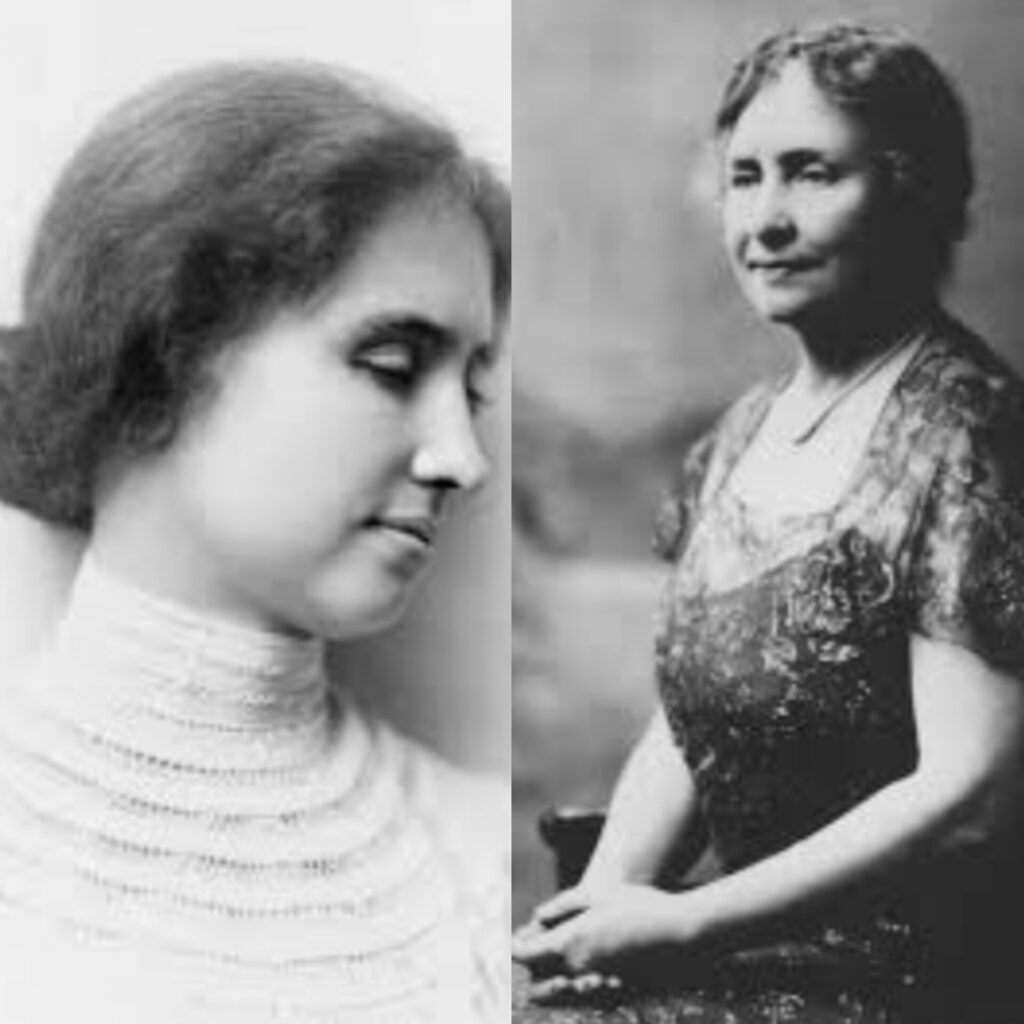

Helen Keller was one of the most inspiring figures of the 20th century — an author, lecturer, and activist who overcame the challenges of being both deaf and blind to become a global symbol of courage, education, and human achievement. Her life story continues to inspire millions across the world, showing the power of determination, education, and advocacy.
See also: Michael Jackson Biography: Net Worth, Age, Wife, Education, Family, Career & Early Life
Born in an age with limited resources for people with disabilities, Keller’s achievements stand as proof of what relentless perseverance and guidance can achieve. She famously said, “The only thing worse than being blind is having sight but no vision.”
Highlights of Helen Keller Biography
- Full Name: Helen Adams Keller
- Date of Birth: June 27, 1880
- Place of Birth: Tuscumbia, Alabama, USA
- Date of Death: June 1, 1968
- Age at Death: 87 years
- Nationality: American
- Occupation: Author, Lecturer, Activist
- Education: Radcliffe College (Harvard University affiliate)
- Net Worth (Estimated): Approximately $1 million (adjusted for her time)
- Family: Parents – Arthur H. Keller and Kate Adams Keller
- Spouse: Never married
- Known For: Overcoming blindness and deafness; becoming an advocate for disability rights and education
Early Life
Helen Adams Keller was born on June 27, 1880, in Tuscumbia, Alabama, to Arthur H. Keller and Kate Adams Keller. Her father was a former Confederate Army officer and newspaper editor, while her mother came from a distinguished Southern family.
At just 19 months old, Keller contracted an illness — likely scarlet fever or meningitis — that left her both deaf and blind. The loss of her sight and hearing was devastating for her family, as communication became nearly impossible. By the age of 6, Helen had developed her own limited signs but was often frustrated and misunderstood.
Her parents sought help, and after consulting experts, they were directed to Alexander Graham Bell, who referred them to the Perkins Institute for the Blind in Boston. There, a young teacher named Anne Sullivan was chosen to work with Helen — a meeting that changed the course of Helen Keller’s life forever.
Education
Helen Keller’s education journey is one of the most remarkable stories in history. Under the guidance of Anne Sullivan, she learned to communicate through the manual alphabet (letters spelled into her hand) and later through Braille and speech training.
At the age of 10, Keller began to speak after years of practice, and by 16, she could understand lectures through tactile methods. She attended Radcliffe College, becoming the first deaf-blind person to earn a Bachelor of Arts degree in 1904.
While studying, Keller learned multiple languages, read literature in Braille, and wrote essays that expressed her deep insight into human nature and society. Her education at Radcliffe was supported by influential figures like Mark Twain and John D. Rockefeller, who admired her intelligence and determination.
Family
Helen Keller came from a loving and supportive family. Her father, Arthur H. Keller, served as a captain in the Confederate Army and later became the editor of the North Alabamian newspaper. Her mother, Kate Adams Keller, encouraged Helen’s education and sought out the best resources to help her communicate.
Helen was the oldest of several siblings, including her half-brothers James and Simpson Keller, and her younger sister Mildred Keller. Although her disabilities initially created emotional and practical challenges within the family, they remained devoted to her growth and happiness.
Career and Achievements
Author and Writer
Helen Keller wrote more than a dozen books and hundreds of essays. Her first autobiography, “The Story of My Life” (1903), written while she was still a student at Radcliffe, became a classic of world literature. Other notable works include “The World I Live In” (1908) and “Out of the Dark” (1913).
Lecturer and Activist
Keller traveled extensively, giving lectures and speeches in the United States and abroad. Despite her disabilities, she communicated through interpreters and touch language, inspiring audiences everywhere she went.
She was a passionate advocate for the blind and deaf, women’s suffrage, labor rights, and world peace. Helen was also a founding member of the American Civil Liberties Union (ACLU) in 1920.
Advocacy for the Disabled
Helen Keller’s lifelong partnership with Anne Sullivan — often called “the Miracle Worker” — became the cornerstone of disability education worldwide. Together, they proved that sensory loss does not define a person’s intellectual or emotional potential.
Keller also worked for the American Foundation for the Blind (AFB) for over 40 years, raising awareness and funds to improve education and accessibility for visually impaired people.
International Influence
Helen visited over 35 countries, meeting world leaders such as Winston Churchill, Jawaharlal Nehru, and Queen Elizabeth II. Her presence inspired movements for disability rights and social inclusion around the globe.
Net Worth and Financial Overview
While Helen Keller never pursued wealth, her literary works, speaking tours, and collaborations provided her with a stable income. By modern estimates, her net worth would have been equivalent to around $1 million USD during her lifetime, largely from book royalties, speaking engagements, and sponsorships through charitable organizations.
She donated much of her earnings to charitable causes, focusing particularly on education for the blind and deaf. Keller lived a modest life, valuing purpose and service over material possessions.
Personal Life
Helen Keller never married and had no children. Her closest relationship was with her teacher and lifelong companion, Anne Sullivan, and later with Sullivan’s assistant, Polly Thomson, who cared for Helen after Anne’s death in 1936.
Helen’s personal philosophy revolved around optimism, spirituality, and resilience. She found inspiration in faith and believed deeply in the interconnectedness of all people.
Later Years and Death
In her later years, Keller continued to write and advocate despite declining health. She suffered a series of strokes in the 1960s and eventually retired from public life.
Helen Keller passed away peacefully in her sleep on June 1, 1968, at her home in Easton, Connecticut, just weeks before her 88th birthday. Her ashes were laid to rest at the Washington National Cathedral, beside those of her beloved teachers Anne Sullivan and Polly Thomson.
Legacy
Helen Keller’s legacy is one of hope, courage, and empowerment. She demonstrated that disability is not a limitation but a challenge to be overcome. Her advocacy for equality, education, and accessibility has inspired generations and led to major reforms in disability rights.
She received numerous honors, including the Presidential Medal of Freedom (1964) and induction into the National Women’s Hall of Fame.
Today, her name remains synonymous with perseverance and the triumph of the human spirit.
Conclusion
Helen Keller’s story is one of resilience, intellect, and compassion. Her journey from silence and darkness to worldwide recognition continues to inspire millions. She changed how the world views disability and education, proving that the human mind and heart can overcome any obstacle.
As she once said:
“Although the world is full of suffering, it is also full of the overcoming of it.”
Would you like me to create a motivational summary or timeline of Helen Keller’s key life events and achievements next?