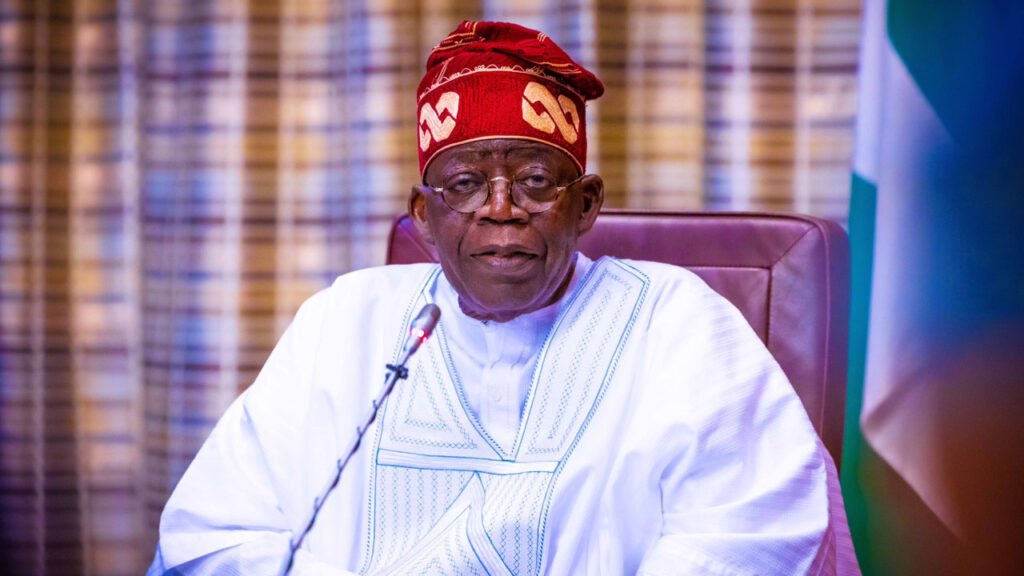

Bola Ahmed Tinubu is one of the most influential political figures in modern Nigerian history. A former accountant, senator, governor of Lagos State, party strategist, and now the President of Nigeria, Tinubu has played a major role in shaping the country’s democratic and electoral landscape for more than three decades. He became Nigeria’s president in 2023 after winning a highly contested election and taking office on May 29, 2023.
Any balanced Bola Ahmed Tinubu biography must go beyond campaign slogans and criticism. His supporters often describe him as a master political organizer and one of the architects of opposition coalition politics in Nigeria, while critics point to long-running disputes around his records, finances, and style of power. That mix of achievement, influence, controversy, and endurance is what makes Tinubu such a central figure in Nigerian public life.
Early Life and Education
Bola Ahmed Tinubu was born on March 29, 1952, in what was then the Colony and Protectorate of Nigeria. Most standard reference works list him as being from Lagos and identify him as a Nigerian politician of Yoruba background. As of March 20, 2026, Bola Tinubu is 73 years old.
Details of Tinubu’s early life have sometimes been less straightforward than those of many public figures, and some aspects of his background have been debated in Nigerian politics. Still, the broad outline accepted by major reference sources is that he spent part of his formative years in Nigeria before continuing his education in the United States.
On Bola Tinubu education, Britannica reports that he attended Richard J. Daley College in Chicago before transferring to Chicago State University, where he earned a B.S. in Business Administration in 1979, with accounting as a focus. His educational history later became the subject of public controversy and legal-political debate, but Chicago State University has remained central to the public record of his formal higher education.
Career Before Politics
Before his rise in Nigerian politics, Tinubu built a professional background in accounting and corporate management. Official and reference biographies describe him as a trained accountant who worked in the United States before returning to Nigeria. After returning home in the 1980s, he worked at Mobil Oil Nigeria, where he rose through the ranks to become a senior executive, including service as treasurer.
This corporate phase is an important part of the Bola Ahmed Tinubu biography because it shaped the image he later projected in politics: that of a technocratic reformer who understood finance, administration, and institutional systems. His supporters frequently link his later governance style in Lagos to that earlier business and accounting experience. That is an interpretation drawn from the overlap between his professional training and the fiscal reforms credited to his governorship.
Political Career
Entry Into Politics
Tinubu entered national politics during Nigeria’s Third Republic. He was elected Senator for Lagos West in 1992 under the Social Democratic Party. During that period, he chaired Senate committees connected to finance, banking, appropriations, and currency matters. After the annulment of the June 12, 1993 presidential election, he became associated with the pro-democracy struggle and the National Democratic Coalition (NADECO), which opposed military rule and backed the restoration of democratic governance.
Like many politicians of that era, Tinubu’s career was shaped by exile, resistance, and return. The Abacha years were a defining period for several future civilian power brokers, and Tinubu emerged from that era with credibility among pro-democracy activists as well as influence inside southwestern political networks. This broader significance is an inference based on his documented NADECO role and his later prominence in democratic party politics.
Governor of Lagos State
Tinubu’s biggest political breakthrough came in 1999, when he was elected Governor of Lagos State. He was reelected in 2003 and served until 2007. Britannica credits his administration with strengthening Lagos State’s finances through improved tax collection and pursuing public transportation initiatives aimed at easing traffic problems in one of Africa’s largest cities.
His years in Lagos are widely seen as the foundation of his later national power. During and after his governorship, Tinubu built a durable political structure, mentored future officeholders, and consolidated influence across Lagos and much of southwestern Nigeria. Admirers see this as evidence of long-term political vision; critics see it as proof of machine-style politics. Either way, his tenure in Lagos turned him from a state politician into a national power broker.
Influence in Nigerian Politics
After leaving office in Lagos, Tinubu remained deeply influential. He became a major opposition strategist and played a central role in coalition building that eventually helped form the All Progressives Congress (APC), the party that defeated the long-ruling People’s Democratic Party at the federal level in 2015. His ability to build alliances, fund structures, and shape candidate selection gave him a reputation as one of Nigeria’s most formidable political organizers.
For many observers, Tinubu’s greatest political strength has never been public speaking alone, but network building. He is often described as a “kingmaker” because of his influence over careers, party structures, and regional political alignments. That description is not a formal office, but it reflects how widely his behind-the-scenes power has been perceived in Nigerian politics.
Presidency
Visit: https://novaline.com.ng/peter-obi-biography
Visit: https://novaline.com.ng/nicolas-maduro-biography
See Also: https://novaline.com.ng/donald-trump-biography
Tinubu formally announced his presidential ambition in January 2022 and won the APC presidential primary in June 2022. On March 1, 2023, Nigeria’s electoral commission declared him the winner of the presidential election. Reuters reported that he was declared president-elect after defeating his main rivals in a disputed contest, and he was sworn in on May 29, 2023. See: https://www.reuters.com/world/africa/nigerias-tinubu-declared-president-elect-by-electoral-commission-2023-03-01
His presidency began with immediate economic decisions. In his inaugural period, Tinubu moved to end Nigeria’s long-running fuel subsidy regime and pursued exchange-rate reforms. Reuters later described his administration as having launched Nigeria’s most ambitious economic overhaul in decades, including subsidy removal, currency reforms, and tax-related changes aimed at strengthening public finances. v
These reforms have had mixed political effects. Supporters argue that they addressed costly structural distortions that previous governments avoided. Critics argue that they worsened hardship for ordinary Nigerians by driving up transport costs, inflation, and the broader cost of living. Reuters reported in 2025 that the reforms had contributed to a severe cost-of-living crisis even as the government defended them as necessary for long-term recovery.
Tinubu has also been visible in regional diplomacy. The Nigerian presidency noted that he was elected Chairman of the ECOWAS Authority of Heads of State and Government in July 2023, underscoring his role in West African diplomacy shortly after taking office.
Personal Life
In his personal life, Tinubu is married to Oluremi Tinubu, a politician in her own right who served as a senator and became First Lady of Nigeria when he assumed office in 2023. Major reference sources report that they married in 1987.
On the question of Bola Ahmed Tinubu family, widely cited biographical sources state that he is the father of six children. Public reporting also notes that his family has included both biological children and a blended household structure. Because different outlets have framed the family count in slightly different ways, the safest broadly sourced description is that Tinubu is a married father with a large and publicly known family network.
Bola Tinubu Net Worth and Assets
Search interest around Bola Tinubu net worth is high, but reliable verification is limited. Unlike some business tycoons whose wealth is tied to listed companies and transparent public disclosures, Tinubu’s finances have long been the subject of political debate rather than definitive public accounting. Major reference sources themselves note that aspects of his finances have been unclear or contested.
For a neutral, publishable biography, the most accurate formulation is this: there is no universally verified public figure for Bola Tinubu’s net worth. Many online estimates exist, but they vary widely and are often unsourced or politically motivated. A fact-based article should therefore avoid presenting a precise number as confirmed fact unless it is backed by audited disclosure or authoritative public documentation, which is not clearly available in the sources reviewed here.
Controversies
No serious Bola Ahmed Tinubu biography can ignore the controversies that have followed him for years. One longstanding issue involves disputes over his educational records, including debate around documents associated with Chicago State University. Reuters and other outlets have reported on the political controversy around those records, especially during and after the 2023 election cycle.
Another major controversy concerns a 1993 U.S. forfeiture case involving funds linked by U.S. authorities to narcotics-trafficking allegations. The issue resurfaced prominently during the 2023 election season. It remains one of the most discussed and politically sensitive parts of Tinubu’s public history. When writing neutrally, it is important to note that this issue has been the subject of legal and political dispute for years and continues to shape public debate around his image.
His 2023 election victory was also contested by opposition figures. Reuters and AP both reported that the election result was disputed, with complaints over process failures and legal challenges after the declaration. Reuters later reported that opposition candidates appealed a tribunal judgment that upheld Tinubu’s victory.
Legacy and Influence
Tinubu’s legacy is already significant even though his presidency is still unfolding. Before entering Aso Rock, he had already shaped the careers of governors, lawmakers, ministers, and party leaders. His influence on coalition politics, especially the rise of the APC as a national force, is likely to remain a major part of how historians assess his role in Nigeria’s Fourth Republic.
As president, his longer-term legacy may depend on whether his reform agenda produces durable economic improvement without permanently deepening hardship and distrust. If subsidy removal, fiscal restructuring, and exchange-rate changes eventually stabilize the economy, he may be remembered as a leader who took politically costly decisions that others avoided. If insecurity, inflation, and living costs remain dominant, critics will likely define his era differently. That is an informed projection based on the current debate surrounding his policies.
Timeline of Major Political Achievements

-
March 29, 1952: Born in Nigeria.
-
1979: Earned a B.S. in Business Administration from Chicago State University.
-
1980s: Worked at Mobil Oil Nigeria and rose to senior finance roles.
-
1992: Elected Senator for Lagos West.
-
1993–1998: Became active in pro-democracy politics linked to NADECO during military rule.
-
1999: Elected Governor of Lagos State.
-
2003: Reelected Governor of Lagos State.
-
2013: Helped shape the emergence of the APC as a major opposition coalition.
-
June 2022: Won the APC presidential primary.
-
March 1, 2023: Declared winner of Nigeria’s presidential election.
-
May 29, 2023: Sworn in as the President of Nigeria.
-
July 2023: Elected ECOWAS chairman by regional leaders.
FAQ
What is Bola Ahmed Tinubu’s age?
Bola Ahmed Tinubu was born on March 29, 1952. As of March 20, 2026, he is 73 years old.
What is Bola Tinubu’s educational background?
He studied in the United States, attending Richard J. Daley College before earning a B.S. in Business Administration from Chicago State University in 1979.
What did Bola Tinubu do before politics?
Before becoming a full-time politician, Tinubu worked as an accountant and later held senior positions at Mobil Oil Nigeria.
When did Bola Tinubu become President of Nigeria?
He was declared winner of the 2023 presidential election on March 1, 2023, and was sworn in on May 29, 2023.
What is Bola Tinubu’s net worth?
There is no universally verified public figure for his net worth. Many estimates circulate online, but authoritative public confirmation is limited.
Conclusion
This Bola Ahmed Tinubu biography tells the story of a politician whose influence has stretched from the senate chamber to Lagos State, party coalition building, and finally the presidency. His journey combines professional training in finance, long-term political strategy, democratic activism, executive leadership, and major national controversy.
Whether history judges him mainly as a reformer, a political kingmaker, a controversial power broker, or a transformational president will depend heavily on the outcomes of his presidency. What is already beyond doubt is that Bola Ahmed Tinubu remains one of the defining figures in Nigeria’s democratic era