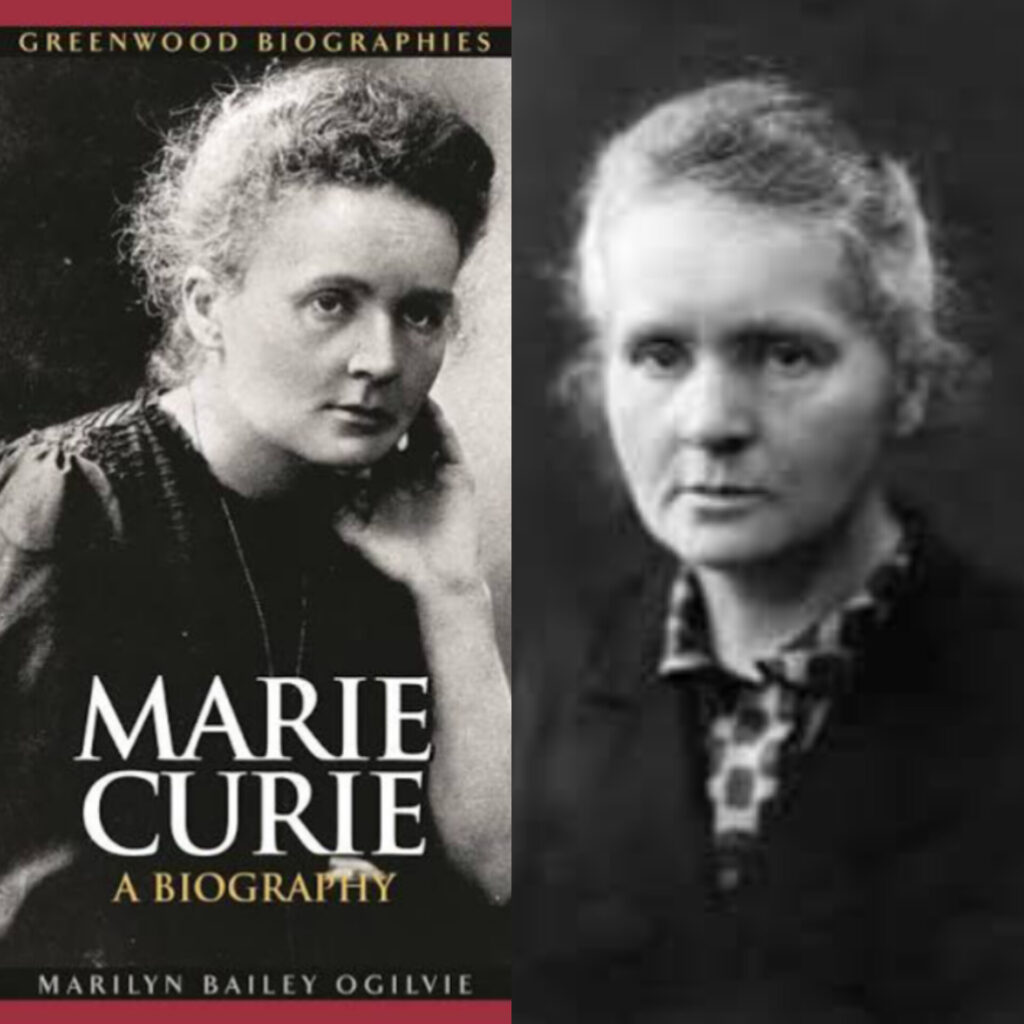

Marie Curie Biography: Net Worth, Age, Husband, Education, Family, Career & Early LifeMarie Curie is one of the most celebrated scientists in world history and a pioneering figure in the fields of physics and chemistry. Renowned for discovering polonium and radium, she became the first woman to win a Nobel Prize, the first person to win two Nobel Prizes, and the only person to win in two scientific fields. Her groundbreaking work in radioactivity changed the course of modern science, medicine, and nuclear research.
Despite facing gender barriers, poverty, and political restrictions, Marie Curie’s relentless pursuit of knowledge made her a global symbol of scientific excellence.
As she once said, “Nothing in life is to be feared, it is only to be understood.”
This biography explores Curie’s early life, family, education, marriage, scientific achievements, struggles, net worth, and the legacy she left behind.
See also: Adolf Hitler Biography: Net Worth, Age, Wife, Education, Family, Career & Early Life
Highlights of marie curie Biography
- Full Name: Maria Salomea Skłodowska Curie
- Born: November 7, 1867
- Died: July 4, 1934
- Nationality: Polish-born, later naturalized French
- Profession: Physicist, Chemist, Researcher
- Net Worth: Approx. $1–5 million (historical equivalent)
- Spouse: Pierre Curie (m. 1895–1906)
- Known For: Discovering polonium and radium, pioneering radioactivity research, two-time Nobel Prize winner
Early Life
Marie Curie was born on November 7, 1867, in Warsaw, Poland, then under Russian occupation. She was the youngest of five children in a family of educators. Her father, Władysław Skłodowski, was a mathematics and physics teacher, while her mother, Bronisława, ran a boarding school for girls.
Growing up, Curie faced political oppression, gender discrimination, and financial hardship. Her family lost much of their wealth due to patriotic involvement in Polish uprisings against Russian rule. Despite this, she excelled academically, displaying remarkable memory and determination from a young age.
Curie attended clandestine “Flying University” classes—an underground education network for Poles—because women were banned from formal higher learning under Russian rule. These early experiences shaped her resilience and passion for scientific inquiry.
Education
Marie Curie’s journey to higher education was difficult. In 1891, at age 24, she moved to Paris to study at the University of Paris (Sorbonne). She lived in poverty, often studying by candlelight while battling cold winters and poor health.
She pursued two degrees simultaneously:
- Physics (completed in 1893, first in her class)
- Mathematics (completed in 1894, second in her class)
Her academic excellence drew attention from leading French scientists. During her research on magnetism, she met Pierre Curie, who would become her scientific partner and husband.
Career / Professional Journey
Marie Curie’s scientific career is one of the most influential in history.
1. Discovery of Radioactivity
Building on Henri Becquerel’s work on uranium, Curie conducted experiments that led her to coin the term radioactivity. She discovered that certain elements emitted energy from within, contradicting previous scientific assumptions.
2. Discoveries of Polonium and Radium
In 1898, Marie and Pierre Curie announced two groundbreaking discoveries:
- Polonium, named after her homeland Poland
- Radium, known for its intense radioactivity
Extracting radium from tons of pitchblende ore required immense physical labor. Curie often worked long hours stirring boiling chemical mixtures under hazardous conditions—unaware of the long-term dangers of radiation.
3. Nobel Prizes
Marie Curie received two Nobel Prizes:
- 1903 Nobel Prize in Physics, shared with Pierre Curie and Henri Becquerel
- 1911 Nobel Prize in Chemistry, awarded to her alone for isolating pure radium and advancing radioactivity research
She became the only person in history to win in two different scientific fields.
4. WWI Contributions
During World War I, Curie developed mobile X-ray units—called “Little Curies”—to help doctors locate bullets and fractures in wounded soldiers. She trained medical staff and even drove some units to the front lines herself.
5. Later Research and Influence
After Pierre’s death in 1906, she became the first female professor at the Sorbonne. Curie’s research continued to influence medical treatments, radiation therapy, nuclear science, and modern chemistry.
Her institutes in Paris and Warsaw remain major scientific centers today.
Net Worth and Lifestyle
Marie Curie’s estimated historical net worth was around $1–5 million, adjusted for modern value. Her income came from:
- Salaries from academic positions
- Research grants
- Scientific prizes
- Published works
Despite these funds, Curie lived modestly. She famously refused to patent the radium isolation process, believing scientific knowledge should benefit humanity, not personal wealth.
Curie often donated money to research and war relief efforts, prioritizing scientific progress over material comfort.
Personal Life
Marie Curie married Pierre Curie in 1895. Their marriage was built on mutual respect, intellectual partnership, and shared scientific passion. Pierre was one of the few men of his era who supported a woman pursuing advanced science.
They had two daughters:
- Irène Joliot-Curie – Nobel Prize winner in Chemistry
- Ève Curie – Author and humanitarian
Curie was known for her intense work ethic, introverted personality, and lifelong dedication to science. Her close relationship with fellow scientist Paul Langevin after Pierre’s death caused public scandal, but it did not diminish her scientific reputation.
Death
Marie Curie died on July 4, 1934, from aplastic anemia, a condition linked to prolonged radiation exposure. At the time, the dangers of radiation were not fully understood, and Curie handled radioactive materials without protection for many years.
Her notebooks, clothing, and laboratory items remain radioactive to this day.
She is buried in the Panthéon in Paris—one of the highest honors in France—alongside her husband Pierre.
Conclusion
Marie Curie’s life is a testament to courage, intelligence, and perseverance. Despite poverty, discrimination, and personal loss, she reshaped modern science and opened doors for women in STEM fields. Her discoveries revolutionized medicine, physics, and chemistry, and her legacy continues to influence scientific research worldwide.
Her story reminds us that determination and curiosity can change the world.
As she once said, “We must believe that we are gifted for something and that this thing must be attained.”
Feel free to request another biography in the same structure.
FAQs About Marie Curie
1. What was Marie Curie’s net worth?
Her estimated historical net worth was $1–5 million, mainly from academic work and scientific prizes.
2. How old was Marie Curie when she died?
She died at 66 years old in 1934.
3. What was Marie Curie’s educational background?
She studied physics and mathematics at the University of Paris (Sorbonne), graduating at the top of her class.
4. Was Marie Curie married?
Yes. She was married to Pierre Curie, her scientific collaborator and partner, until his death in 1906.
5. What are Marie Curie’s greatest achievements?
Her major contributions include discovering radium and polonium, pioneering radioactivity research, and winning two Nobel Prizes.
6. What was Marie Curie’s nationality?
She was Polish-born and later became a naturalized French citizen.
7. How did Marie Curie become famous?
She became famous for her discoveries in radioactivity and for being the first woman to win a Nobel Prize and the only person to win in two scientific fields.