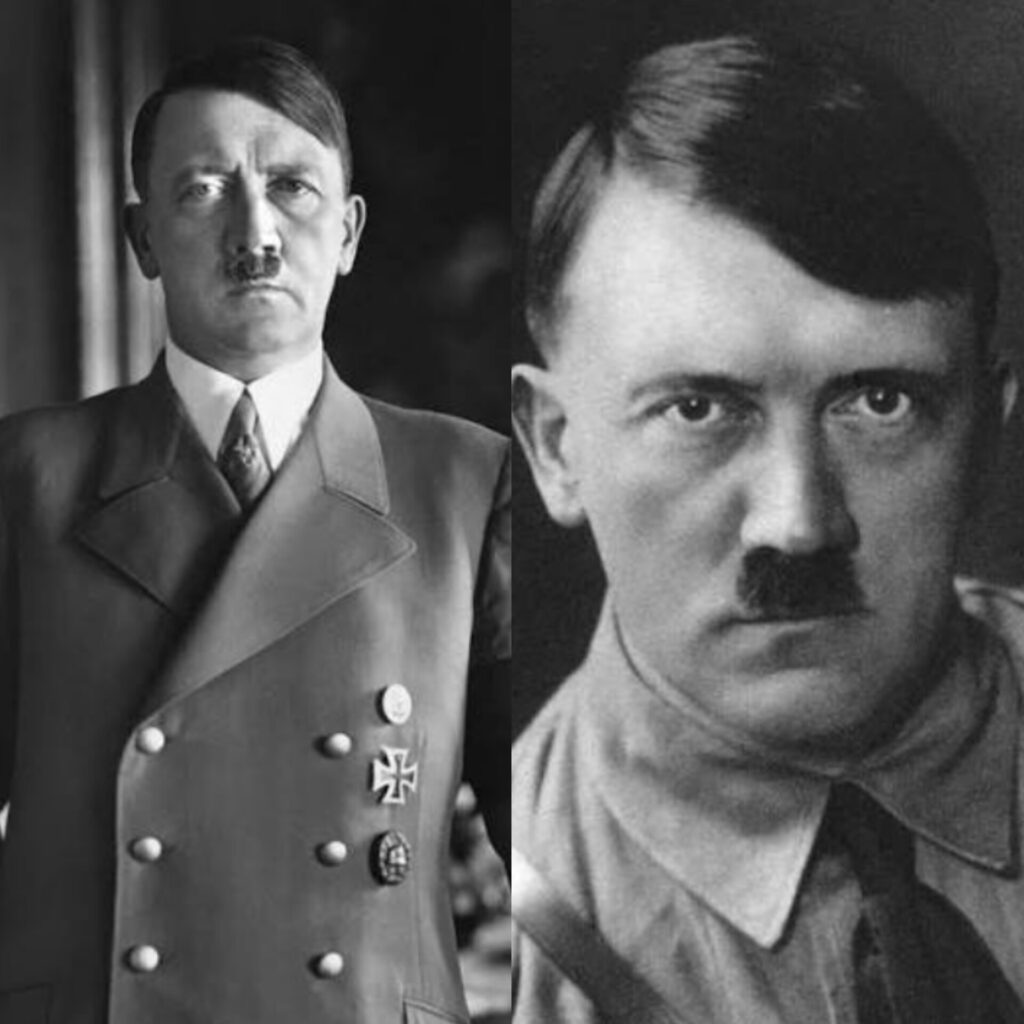

Adolf Hitler remains one of the most infamous figures in world history, known as the dictator who led Nazi Germany from 1933 to 1945. His actions resulted in World War II, the deaths of millions, and the horrors of the Holocaust, making his life story a permanent warning about the dangers of extremism, authoritarianism, and hate-driven ideology.
Though he came from a modest background, Hitler’s rise to power was marked by propaganda, manipulation, and political violence. His dictatorship plunged Europe into devastation, leaving a legacy defined not by achievement but by catastrophic human suffering.
As historians often emphasize, “To understand Hitler is not to justify him, but to prevent such evil from rising again.”
This biography examines Hitler’s early life, family, education, destructive political career, personal relationships, death, and financial history.
See also: Ennio Morricone Biography: Net Worth, Age, Wife, Education, Family, Career & Early Life
Highlights of adolf hitler biography
- Full Name: Adolf Hitler
- Date of Birth: April 20, 1889
- Died: April 30, 1945
- Nationality: Austrian-born; German Chancellor & Dictator
- Profession: Politician, Dictator (Nazi Party Leader)
- Net Worth: Approx. $5–10 million equivalent (at peak)
- Spouse: Eva Braun (married April 1945, one day before death)
- Known For: Leading Nazi Germany, initiating WWII, Holocaust atrocities
Early Life
Adolf Hitler was born on April 20, 1889, in Braunau am Inn, Austria-Hungary, to Alois and Klara Hitler. His father, Alois, was a strict customs officer, while his mother, Klara, was gentle and nurturing. Hitler was one of several children, though many of his siblings died young.
His childhood was marked by conflict with his father, who disapproved of his artistic interests. After Alois died in 1903, Hitler’s school performance declined, and he drifted toward a life of idleness, dreaming of becoming a painter.
He later moved to Vienna, where poverty, homelessness, and exposure to political extremism influenced his worldview — including the development of racist and antisemitic beliefs that would later define his dictatorship.
Education
Hitler did not complete formal higher education. He attended secondary school but performed poorly and dropped out at age 16.
Attempts to enroll in the Academy of Fine Arts Vienna twice ended in rejection, with the school deeming his artistic skills inadequate. His years in Vienna, however, exposed him to nationalist propaganda, anti-Jewish rhetoric, and political ideologies that shaped his future ambitions.
His education was largely self-directed, driven by reading books on German nationalism, militarism, and political strategy.
Career / Professional Journey
1. Early Adulthood
Before politics, Hitler struggled financially. He sold paintings, lived in shelters, and developed strong nationalist feelings. During World War I, he served as a soldier in the German Army, where he was wounded and decorated for bravery.
2. Entry into Politics
After the war, he joined the German Workers’ Party, which he soon transformed into the National Socialist German Workers’ Party (Nazi Party). His powerful public speaking skills attracted followers, leading to a failed coup — the Beer Hall Putsch of 1923. He was imprisoned, where he wrote Mein Kampf, outlining extremist ideology.
3. Rise to Power
Through propaganda, manipulation, and exploitation of economic crises, Hitler became Chancellor in 1933. He quickly dismantled democratic institutions, establishing a totalitarian dictatorship.
4. Dictatorship and War
Hitler’s regime implemented:
- Aggressive expansionist policies
- Racial laws targeting Jews and minorities
- State-controlled propaganda
- Mass imprisonment and executions
In 1939, Germany invaded Poland, triggering World War II. His military decisions and genocidal policies led to unprecedented global devastation.
5. The Holocaust
Under Hitler’s leadership, the regime carried out the systematic murder of six million Jews and millions of others. This remains one of the darkest chapters in human history.
His leadership brought destruction to Europe and ultimately to Germany itself.
Net Worth and Lifestyle
At his peak, Hitler’s estimated net worth was equivalent to $5–10 million. His wealth came from:
- Royalties from Mein Kampf
- State-funded expenses
- Confiscated property from persecuted groups
- Lavish gifts from Nazi officials
Despite promoting simplicity publicly, Hitler enjoyed large estates, expensive art, and state-funded luxuries. Much of this wealth was acquired through unethical and illegal means.
Personal Life
Hitler’s personal life was isolated and tightly controlled by his inner circle.
Relationship and Marriage:
He had a long-term partner, Eva Braun, whom he met in the 1920s. Their relationship was mostly kept private. On April 29, 1945, as Berlin fell, Hitler married Braun in a brief civil ceremony. The next day, they both died by suicide.
Family:
He had no children. His surviving relatives largely distanced themselves from his legacy.
Hitler was known for strict routines, vegetarian eating habits, and avoiding alcohol, though these personal traits are overshadowed by the immense suffering caused under his leadership.
Death
As Allied forces closed in on Berlin in 1945, Hitler retreated to his underground bunker. On April 30, 1945, he and Eva Braun died by suicide. Their bodies were burned and buried by loyal aides.
His death marked the collapse of Nazi Germany and the end of one of the most destructive regimes in human history.
Conclusion
Adolf Hitler’s life stands as a stark reminder of the catastrophic consequences of hatred, extremism, and unchecked authoritarian power. His decisions and ideology resulted in global war, genocide, and immense human suffering. Understanding his biography is essential not to admire him — but to recognize the conditions that allowed such a figure to rise.
History remembers Hitler not for greatness, but for destruction. His story reinforces the importance of education, tolerance, critical thinking, and vigilance against oppression.
FAQs About Adolf Hitler
1. What was Adolf Hitler’s net worth?
His estimated net worth at the height of his power was $5–10 million, largely accumulated through unethical and illegal means.
2. How old was Adolf Hitler when he died?
He died at 56 years old on April 30, 1945.
3. What was Adolf Hitler’s educational background?
Hitler did not complete high school and was rejected twice from the Academy of Fine Arts Vienna.
4. Was Adolf Hitler married?
Yes. He married Eva Braun on April 29, 1945, one day before their joint suicide.
5. What is Adolf Hitler known for?
He is known as the dictator of Nazi Germany, responsible for World War II and the Holocaust.
6. What was Adolf Hitler’s nationality?
He was Austrian-born but became the leader of Germany.
7. How did Adolf Hitler become famous?
He rose to prominence through extremist political activism, propaganda, and ultimately becoming Germany’s dictator in 1933.